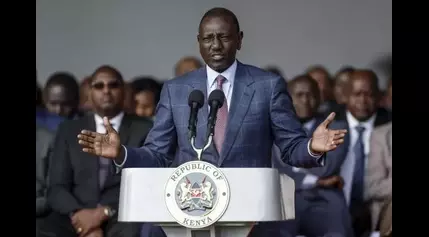
Deadly protests over Kenya finance bill prompt President William Ruto to drop support for tax hikes
2025-11-04
46.8K
4.7K
2K
Kenyan Protests Erupt Over Controversial Finance Bill, Leaving Dozens Dead
Protests in Kenya over a contentious finance bill laden with tax hikes have turned violent, with at least 22 protesters killed and scores more wounded in clashes with police. The protests, led largely by younger Kenyans, have shaken the country and forced the president to back down, refusing to sign the bill into law.
Kenyan Unrest Highlights Urgent Need for Economic Reform
Violent Clashes Erupt Over Proposed Tax Increases
The protests in Kenya began last week, initially against proposed sharp tax increases on staples like bread, cooking oil, and diapers. These controversial measures were abandoned even before the vote in parliament on Tuesday. However, the demonstrations continued to grow in size and intensity, with protesters breaking into the parliament building and setting parts of it on fire.The clashes between protesters and police turned increasingly violent, with reports of police firing teargas, water cannon, and live ammunition in an attempt to control the raucous crowds. Medics and hospital administrators reported close to 300 people injured nationally in the Tuesday clashes.
Despite the violence, the protesters' message appeared to have convinced Kenya's president, William Ruto, to back down. On Wednesday, Ruto announced that he would not sign the finance bill into law, saying he would instead send it back to parliament for changes and calling for a "national dialogue" to address the country's economic crisis.The protests have been organized primarily by younger Kenyans, members of Generation Z, who have used social media to draw large numbers to the events. In the aftermath of the violence, activists vowed to return to the streets on Thursday for another day of demonstrations, with one posting on social media, "You cannot kill all of us. Tomorrow we march peacefully again as we wear white, for all our fallen people. You will not be forgotten!"
Underlying Economic Woes Fuel Unrest
The deeply unpopular tax increases were intended to raise almost .3 billion to help address Kenya's dire financial situation. The national debt has spiraled out of control for years, bringing pressure on the government from foreign financial institutions and forcing it to hand over a massive proportion of its annual revenue in interest payments.In his remarks on Wednesday, President Ruto acknowledged the need for a "conversation as a nation, as to how we manage the affairs of the nation together, the debt, the budget, together." This suggests that the government recognizes the urgent need for economic reform and a more inclusive approach to addressing the country's financial challenges.The protests have highlighted the growing frustration among Kenyans, particularly the younger generation, with the government's handling of the economy. The violence and loss of life are deeply concerning, and the government must now work to address the underlying issues that have fueled this unrest.
International Condemnation and Calls for Restraint
The violence in Kenya has drawn international attention and condemnation. United Nations Secretary-General Antonio Guterres expressed his deep sadness over the reports of deaths and injuries, "including those of journalists and medical personnel, connected to protests and street demonstrations in Kenya." He urged Kenyan authorities to "exercise restraint" and called for peaceful demonstrations.Amnesty International also weighed in, stating that the responsibility for the deaths on Tuesday "lies squarely with President Ruto, even though he was not present on the street. He cannot escape accountability." The human rights group called for a thorough investigation into the use of force by Kenyan security forces.As the situation in Kenya remains fluid, the government must now work to address the root causes of the unrest and find a path forward that balances the need for economic reform with the legitimate concerns and demands of the Kenyan people. The road ahead will be challenging, but the stakes are high, and the future of the country hangs in the balance.