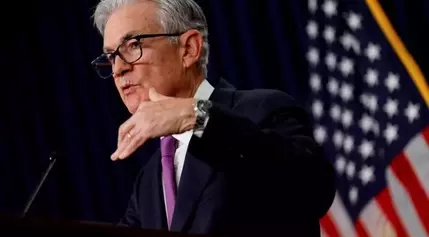
Fed lowers interest rates by half point in first cut since 2020
2025-07-21
Fed Pivots to Dovish Stance, Signals Sustained Easing Ahead
In a significant shift in monetary policy, the U.S. Federal Reserve has slashed interest rates by a half percentage point, marking the first easing of policy since 2020. This decision comes as the central bank aims to navigate the delicate balance between taming inflation and supporting economic growth.
Charting a New Course: The Fed's Dovish Pivot
Cutting Rates, Signaling More Easing
The Federal Reserve's decision to cut its benchmark interest rate by 50 basis points to a range of 4.75%-5.0% represents a notable pivot in its approach. This move, which was not unanimous, comes after the central bank had maintained rates at a 23-year high since July 2023. The consensus among Fed officials suggests that two more 25 basis point cuts are expected this year, followed by four additional cuts in 2024 and two more in 2025.
Dissent and Divided Opinions
The decision was not without dissent, as Fed governor Michelle Bowman preferred a more modest 25 basis point cut. This marks the first time a Fed official has voted against a policy decision in two years, breaking a streak that had lasted for half a decade. The split vote underscores the complex considerations facing the central bank as it navigates the current economic landscape.
Acknowledging the Slowdown
The Fed's move comes as the labor market has shown signs of deceleration, with job creation slowing over the summer months. However, Chair Jerome Powell emphasized that the labor market remains in "solid condition" and that the central bank is committed to keeping it that way. The Fed's updated forecasts reflect a slight uptick in the unemployment rate to 4.4%, a downward revision in economic growth to 2% for this year and the next two years, and a gradual decline in inflation to 2.6% by the end of 2023 and 2.2% in 2024.
Balancing Inflation and Growth
The Fed's decision to ease monetary policy marks a shift from its previous aggressive stance on fighting inflation. Powell acknowledged the progress made in taming price pressures, but cautioned that the central bank's "mission is not yet accomplished." The Fed's actions aim to strike a delicate balance between addressing the lingering inflationary concerns and supporting the overall economic growth and stability.
Preparing for Potential Shocks
Despite the Fed's confidence in the economy's resilience, Powell acknowledged the need to remain vigilant against potential shocks that could lead to a recession. The central bank's policymakers are closely monitoring the economic landscape, ready to adjust their approach as necessary to maintain the economy's strength and mitigate any emerging risks.
Communicating the Rationale
In his press conference, Powell sought to provide clarity and transparency around the Fed's decision-making process. He emphasized the "broad support" for the rate cut and the "lot of common ground" among policymakers, while also addressing the dissent from Bowman. The Fed's communication efforts aim to ensure that its actions are well-understood and aligned with its dual mandate of price stability and maximum employment.